
The History of the ACOG Sight: Design, Development & Service
Posted by Monstrum on Dec 3rd 2025
ACOG, or Advanced Carbine Optical Gunsight, refers to a series of prism sights developed and manufactured by Trijicon from 1986 though today. While the ACOG line has grown to include a multitude of options for magnification, reticles, and color options, each variation stems from one original design that started it all: the TA01.
From its inception, the original TA01 ACOG saw initially limited, but later widespread service among the U.S. military beginning in the late 80s through present day, where it is still used in a limited role, though it has been phased out of frontline service in recent years. The ACOG’s heyday, at least in U.S. military service, spanned from the early 2000s through the 2010s, during which time it saw widespread use both within the U.S. Army and USMC. To this day, the TA01 and its USMC variant, the TA31RCO ACOG, remain iconic pieces of American infantry kit and are instantly recognizable as a staple of the Global War on Terror.
ACOG Predecessors: Prism Sight Origins
Prism optics have been around since the late First World War, where they were used in everything from artillery sights to early sniper rifle optics. Adapted from the same magnification source used by binoculars, early prism sights offered a few unique trade-offs over traditional rifle scopes of their day, namely a wider field of view, compact size, and better light-gathering characteristics.
While the first prism sights suffered from the same issues that plagued other early 20th century optics, early designs were also expensive and difficult to manufacture. This meant that most were relegated only to a small number of specialized troops, including snipers, some machine gunners, and heavy weapons like howitzers. It wouldn’t be until the 1980s that manufacturing, tactics, and engineering evolved enough for the prism sight to become a viable option for regular infantry use.
Design of the ACOG Sight
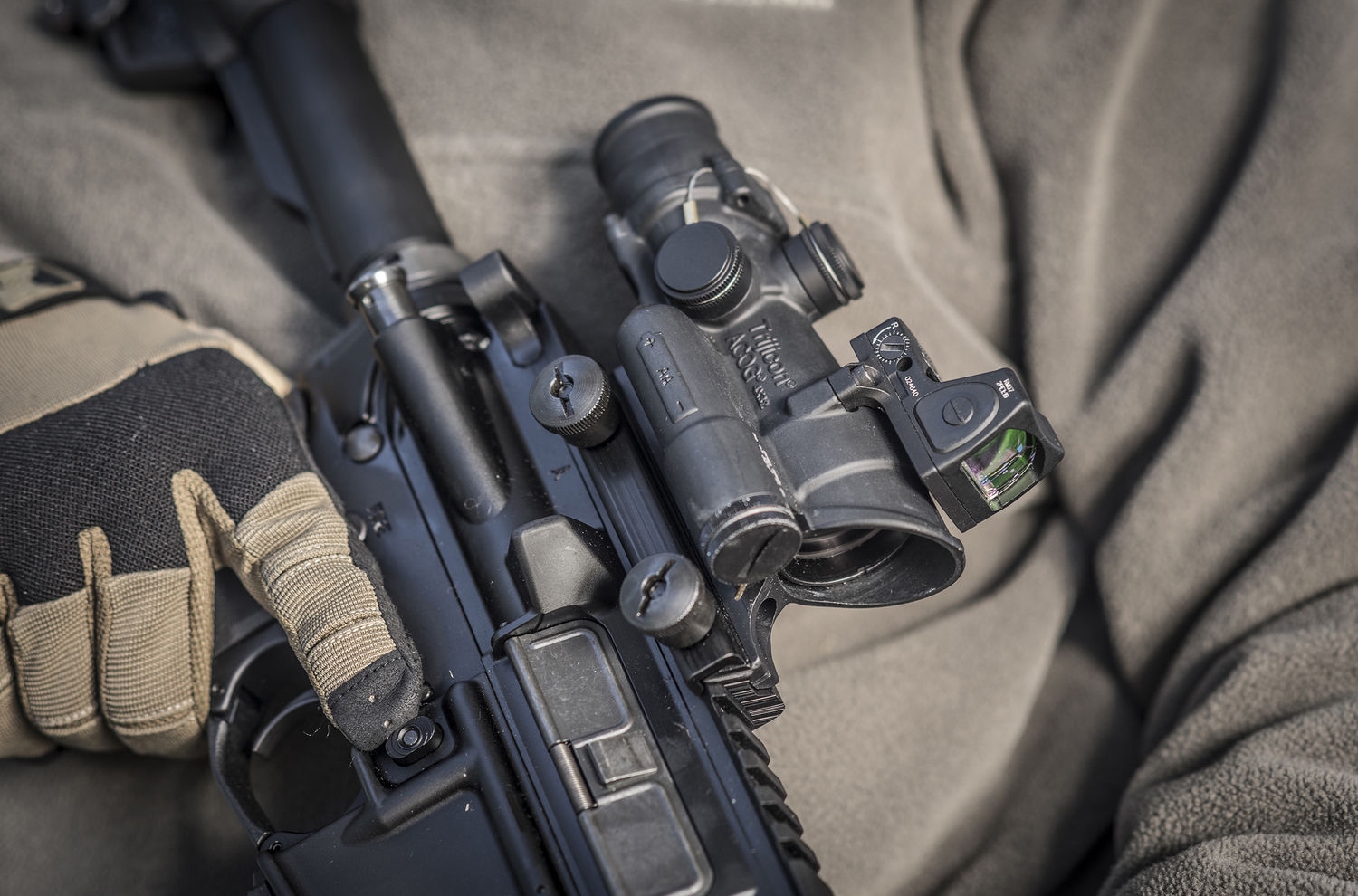
The TA01 ACOG was developed by Trijicon’s founder, Glyn Bindon, in 1986. Like the early prism sights that came before, its design originated from binoculars, which use two prisms as the primary means of magnifying light rather than a series of lenses as traditional scopes use. The result was a 4x magnified scope with a practical compact size that was also simple to use and rugged enough for military use.
The original ACOG had several advantages over bulkier traditional riflescopes of its day, the chiefest of which being its size and simplicity, but the ACOG sight was also designed to complement a new evolution in shooting technique that involved keeping both eyes open. While commonplace in the era of iron sights, this method wouldn’t be realized to its fullest potential until the widespread adoption of optics. Today, we know it as the Bindon Aiming Concept.
The Bindon Aiming concept took the established principle of keeping both eyes open while shooting (maintaining peripheral vision) and paired it with optics that featured bright simplistic reticles that could easily be acquired at speed. At the time, shooting with both eyes open was considered mutually exclusive with the use of magnified optics, but Glyn Bindon set out to change that. He designed his new prism scope to have an illuminated reticle first via tritium, and later by fiber optic, a key component of the ACOG from the outset.
Early Military Trials of the ACOG
Having worked with the Department of Defense prior, Glyn Bindon designed his new optic to military standards. It was made out of 7075 aluminum, the same material as the M16 rifles it was designed to support. Its housing was ruggedized to withstand drop tests and a range of harsh environments while keeping weight to a minimum. It also did away with unnecessary moving parts like diopter focus.
The original TA01 was released in 1987 and sold in small numbers for the next couple years. It was at this time Bindon renamed his original company from Armson to Trijicon, the company we know today. The ACOG sight wouldn’t start gaining serious traction in military circles until the U.S. Army’s Advanced Combat Rifle Program.
In 1989, the U.S. Army set out to find a replacement for the M16 and M4 rifles, but while assessing new innovations in small arms technology, the Army was also looking into new optics. The Trijicon ACOG was tested in parallel with a slew of new rifle and ballistic designs where it proved to be as durable as it was practical. During one test, a rifle exploded, but its ACOG remained functional even with 2/3rds of its front lens destroyed. While the Advanced Combat Rifle Program didn’t yield a new service rifle, the ACOG had started to earn a reputation for itself.
The ACOG in Military Service
Following the tests in 1989, the ACOG continued to sell in small batches. A small number saw action in Operation Just Cause in Panama and Operation Desert Storm. The U.S. Navy SEALs also purchased a limited number of ACOGs in the early 90s, all while the original design was being iterated and improved upon.
Throughout the 90s, ACOG sights were also getting some international recognition. They were adopted by the German GSG9 and would eventually be adopted as official optics by the British and Swedish Armies in 2001, but its biggest break to date came from U.S. Special Operations Command following a successful round of testing in 1995.
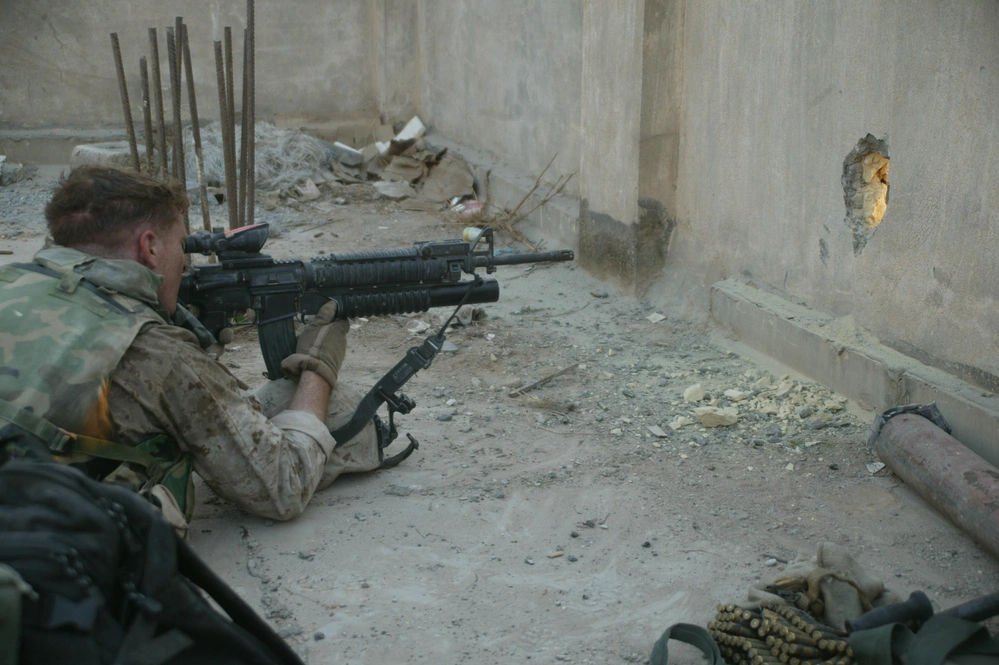
Three years later in 2004, the US Marine Corps would adopt another 4x variant of the ACOG, the TA31, and designated it the RCO or Rifle Combat Optic. The U.S. Army also began fielding ACOG variants both to regular infantry units and among Special Operations Forces.
ACOG Reputation
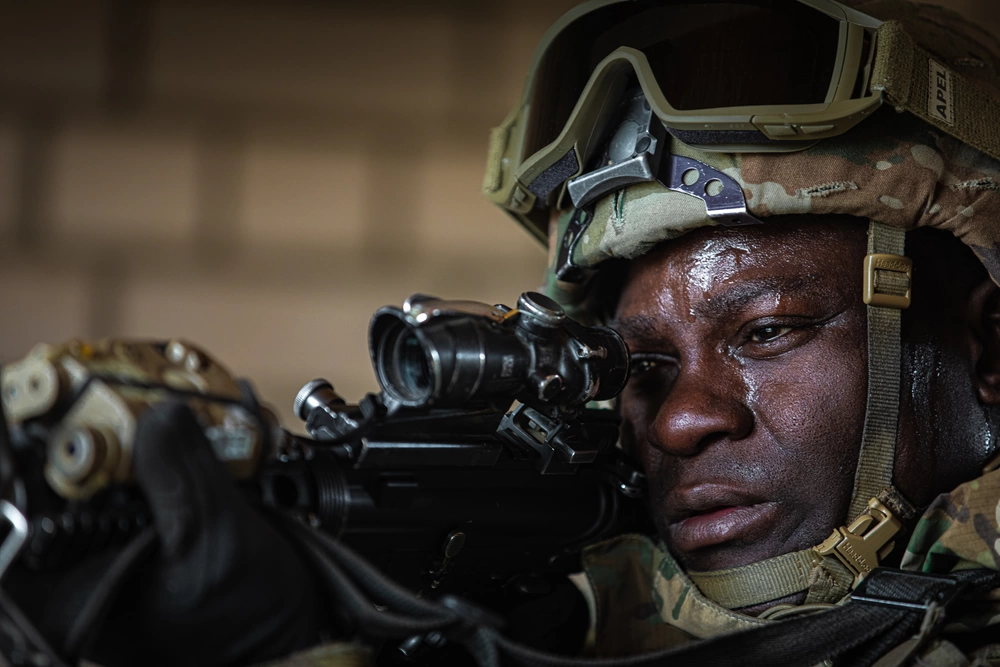
The ACOG Sight saw widespread use by the US Military throughout the Global War on Terror. It was generally very highly regarded by Marines and soldiers who used them, especially for the numerous advantages it held over iron sights. Major General J.N. Mattis famously said, “The ACOG mounted on the M16 service rifle has proven to be the biggest improvement in lethality for the Marine infantryman since the introduction of the M1 Garand in World War II.”
The optic’s magnification greatly expanded its user’s ability to observe, identify, and hit targets at range. During the Second Battle of Fallujah, Marines were reportedly investigated for war crimes due to the number of headshots they were taking on insurgents. The conclusion reached was that Marines, armed with ACOG-equipped M16A4s, were simply taking (and hitting) a higher volume of headshots since that was often the only part of their targets exposed in the urban environments they were fighting in.
ACOG sights also enjoyed a stellar reputation for durability. One famous story comes from Fallujah in 2004. A Marine was taking aim at two insurgents when his ACOG had taken a hit from a 7.62x54R bullet aimed directly at his head. While he was knocked to the ground, he sustained only minor injuries, his ACOG having stopped the bullet inches away from his eye.
Under the pressure test of combat, the ACOG also presented a few drawbacks. While its fixed magnification proved effective at distance, its tight eye box limited its effectiveness in close quarters. U.S. Army Special Operations adapted by mounting “piggy back” red dot sights on top of their ACOGs, a cue Trijicon would take and incorporate into later designs.
Successors of the ACOG
While the ACOG proved to be a highly effective general use optic, it struggled to perform at both close and extended ranges. Its tight eye box meant that it wasn’t very well suited to close quarters combat without the use of a secondary optic, and its modest 4x magnification meant that distant targets were difficult to observe or make hits on.
Its successors in the U.S. military would ultimately be two low-power variable optics. The U.S. Army selected the Vortex Next Generation Squad Weapon-Fire Control (a compound system that pairs a 1-8x LPVO with a suite of other features including an integrated laser range finder, ballistic calculator, and more) and the U.S. Marines opted for a 1-8x version of the Trijicon VCOG.
Are ACOG Sights Still Good?
While the ACOG sight has fallen out of favor among the U.S. military in recent years, it remains a trusted and proven optic that owns the middle ground between close quarters and long range. While its compact size remains a compelling selling point for today’s rifle shooters, its simplicity and fixed magnification limit its capability in certain use cases. ACOG sights remain a good “medium range” option for those who prefer optics with an etched reticle that does not require batteries to use, though its fixed magnification is lacking when compared to modern LPVOs.
ACOG vs. Modern Prism Sights
The legacy of the ACOG and its impact and influence on the world of optics cannot be understated. Almost singlehandedly, the ACOG proved the viability of optics in a modern military context greatly enhancing the capability of the infantry who used it over the iron sights they would otherwise have been stuck with.
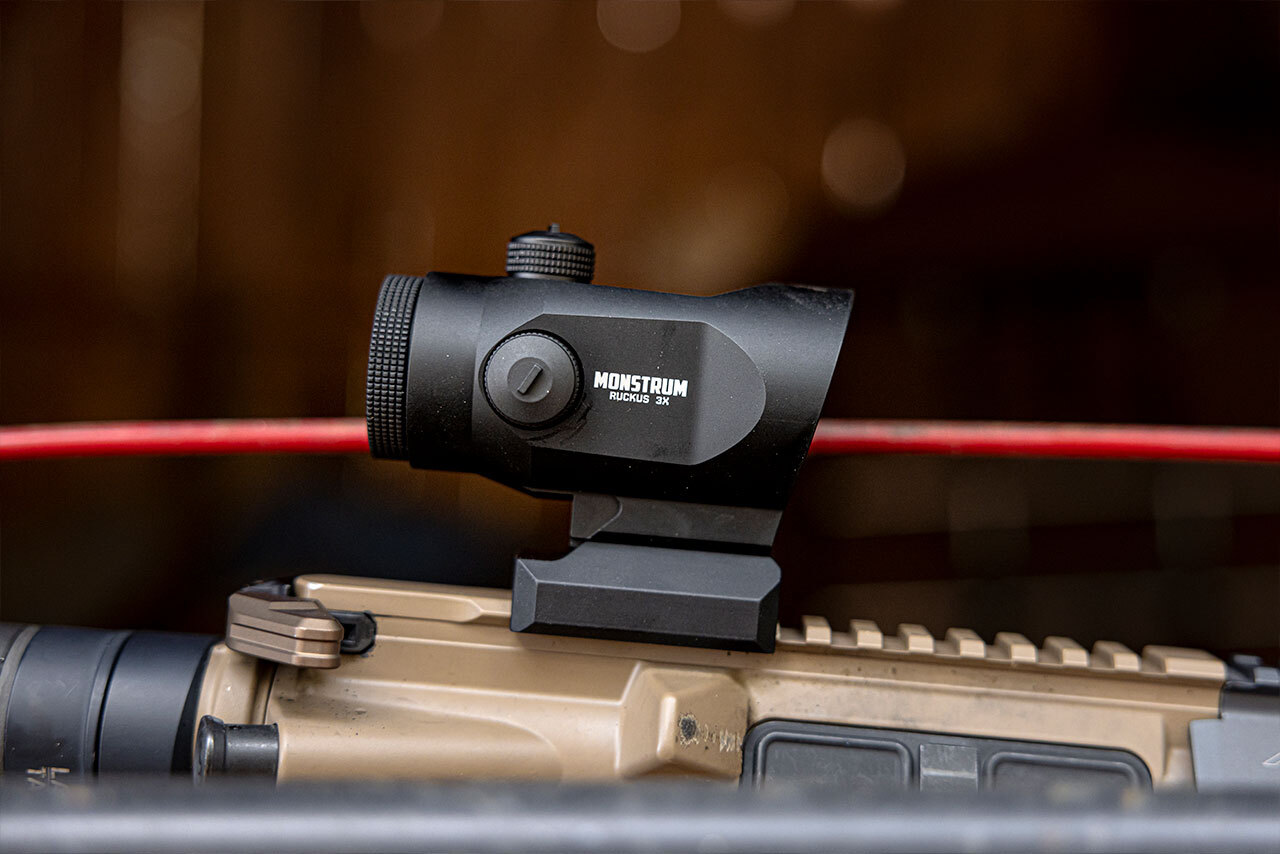
The ACOG, having proved the viability of prism sights, also spawned a slew of new prism optic designs from other manufacturers over the years, some of which offering modern improvements over Trijicon’s original design. These include diopter focus, electronic illumination, smaller form factors, and lower prices. Modern prism sights like the Monstrum Ruckus or Cyborg, for example, offer similar benefits and optical specifications to the ACOG, but at a fraction of the price. For comparison’s sake, a 4x ACOG sight similar to what was used by the U.S. Military has an eye relief of 1.5 inches, weighs 14.9 oz., and costs $1,524 whereas a comparable Monstrum Ruckus Pro 4x Prism Sight has a much better eye relief of 5 inches, weighs 15 oz., and costs only $109.99.
Learn more about our modern prism sights including the Ruckus, Cyborg, Blackbird Series.
ACOG ($1700) vs Monstrum Cyborg ($120): Head to Head Scope Comparison